
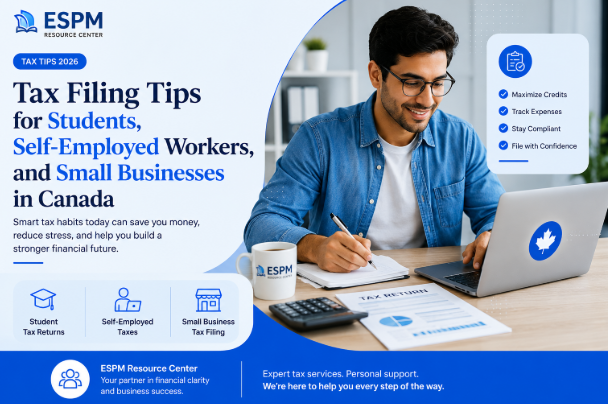
Tax Filing Tips. Filing taxes is an important responsibility for Canadians, whether you’re a student, self-employed professional, freelancer, or small business owner. Understanding your tax obligations can help you stay compliant, avoid penalties, and take advantage of credits and deductions that may reduce the amount of tax you owe or increase your refund.
This guide provides practical tax filing tips for students, self-employed workers, and small businesses across Canada.
Why Filing Your Taxes Matters
Many Canadians assume they only need to file a tax return if they owe money. However, filing your taxes each year can help you access government benefits, tax credits, and potential refunds.
Benefits of filing on time may include:
- Access to federal and provincial tax credits
- Eligibility for government benefit programs
- Accurate contribution records
- Faster processing of refunds
- Reduced risk of penalties and interest charges
Even if you have little or no income, filing a return can help maintain eligibility for certain benefits and programs.
Tax Filing Tips for Students
Many students qualify for valuable tax credits and benefits, yet some miss opportunities simply because they do not file a return.
Keep Your Tuition Documents
Students enrolled in eligible post-secondary programs typically receive official tuition documents that may help reduce taxable income through available education-related credits.
Report All Sources of Income
Income from part-time jobs, internships, scholarships, grants, and self-employment activities may need to be reported depending on the circumstances.
Claim Eligible Expenses
Students may qualify for deductions or credits related to moving expenses, childcare costs, or other eligible expenses based on their situation.
File Every Year
Even if your income is low, filing annually helps establish your tax history and may qualify you for government benefits and credits.
Tax Tips for Self-Employed Workers
The self-employed workforce continues to grow across Canada. Freelancers, contractors, gig workers, and independent professionals have unique tax responsibilities.
Track Business Income Carefully
Maintain accurate records of all payments received throughout the year. Keeping organized records simplifies tax filing and reduces errors.
Separate Personal and Business Expenses
Using separate bank accounts and credit cards for business activities can make bookkeeping more manageable and improve record accuracy.
Keep Receipts and Documentation
Many business-related expenses may be deductible if they are reasonable and directly related to earning income.
Examples may include:
- Office supplies
- Software subscriptions
- Advertising expenses
- Professional services
- Internet and communication costs
Proper documentation is essential in case supporting records are required.
Set Aside Money for Taxes
Unlike traditional employees, self-employed individuals often do not have taxes automatically deducted from payments. Setting aside a portion of income throughout the year can help prepare for tax obligations.
Small Business Tax Filing Best Practices
Small business owners face additional responsibilities when managing taxes and financial records.
Maintain Accurate Bookkeeping
Consistent bookkeeping throughout the year makes tax season easier and helps provide a clearer picture of business performance.
Monitor Business Expenses
Carefully tracking expenses helps identify legitimate deductions and supports accurate financial reporting.
Stay Organized
Important records may include:
- Invoices
- Receipts
- Payroll records
- Bank statements
- Financial reports
Maintaining organized records can save time and reduce stress during tax season.
Understand Filing Deadlines
Meeting tax deadlines helps businesses avoid penalties and maintain compliance with tax regulations.
Common Tax Filing Mistakes to Avoid
Regardless of your situation, avoiding these common errors can help improve the filing process:
Missing Deadlines
Late filing can result in penalties and interest charges.
Reporting Incorrect Information
Double-check personal information, income amounts, and supporting documents before submitting a return.
Forgetting Available Credits
Many taxpayers overlook credits and deductions that could reduce their tax burden.
Poor Record Keeping
Incomplete records can create challenges when preparing returns and responding to requests for documentation.
When Professional Tax Assistance Can Help
Tax situations can become more complex when dealing with self-employment income, multiple sources of earnings, business operations, or changing financial circumstances.
Professional tax support may help with:
- Personal tax filing
- Student tax returns
- Self-employed taxes
- Small business tax filing
- Tax planning
- CRA-related inquiries
Working with experienced tax professionals can help ensure returns are completed accurately and efficiently.
How ESPM Resource Center Can Help
ESPM Resource Center provides tax services for individuals, students, self-employed workers, and small businesses across Canada.
Our team assists clients with:
- Personal income tax returns
- Student tax filing
- Self-employed tax preparation
- Small business tax support
- General tax consultations
- CRA assistance guidance
Whether you’re filing your first return or managing a growing business, our goal is to make the process simple, accurate, and stress-free.
Get Started Today
Tax season doesn’t have to be overwhelming. With proper preparation and professional support, Canadians can confidently manage their tax obligations and focus on their personal, educational, or business goals.
If you need assistance with personal taxes, student tax returns, self-employed taxes, or small business tax filing, contact ESPM Resource Center today.
Helpful Resources
Official Canada Revenue Agency (CRA):
https://www.canada.ca/en/revenue-agency.html
Tax Services:
https://espm.ca/tax-services/
Contact ESPM Resource Center:
https://espm.ca/contact-2/